By Erwin Busselot, Director Business Innovation & Solutions, Ricoh Graphic Communications, Ricoh Europe
Ricoh Europe, London, July 25 2025 – Extolling print’s ability to connect, engage, and drive action is something I am passionate about.
Print has the ability to create messaging and communication that stands out from the marketing noise. It is memorable and performs well in a digital-led world. All of which is why retailers that don’t have print as part of their customer communications strategy suffer, as I discussed here.
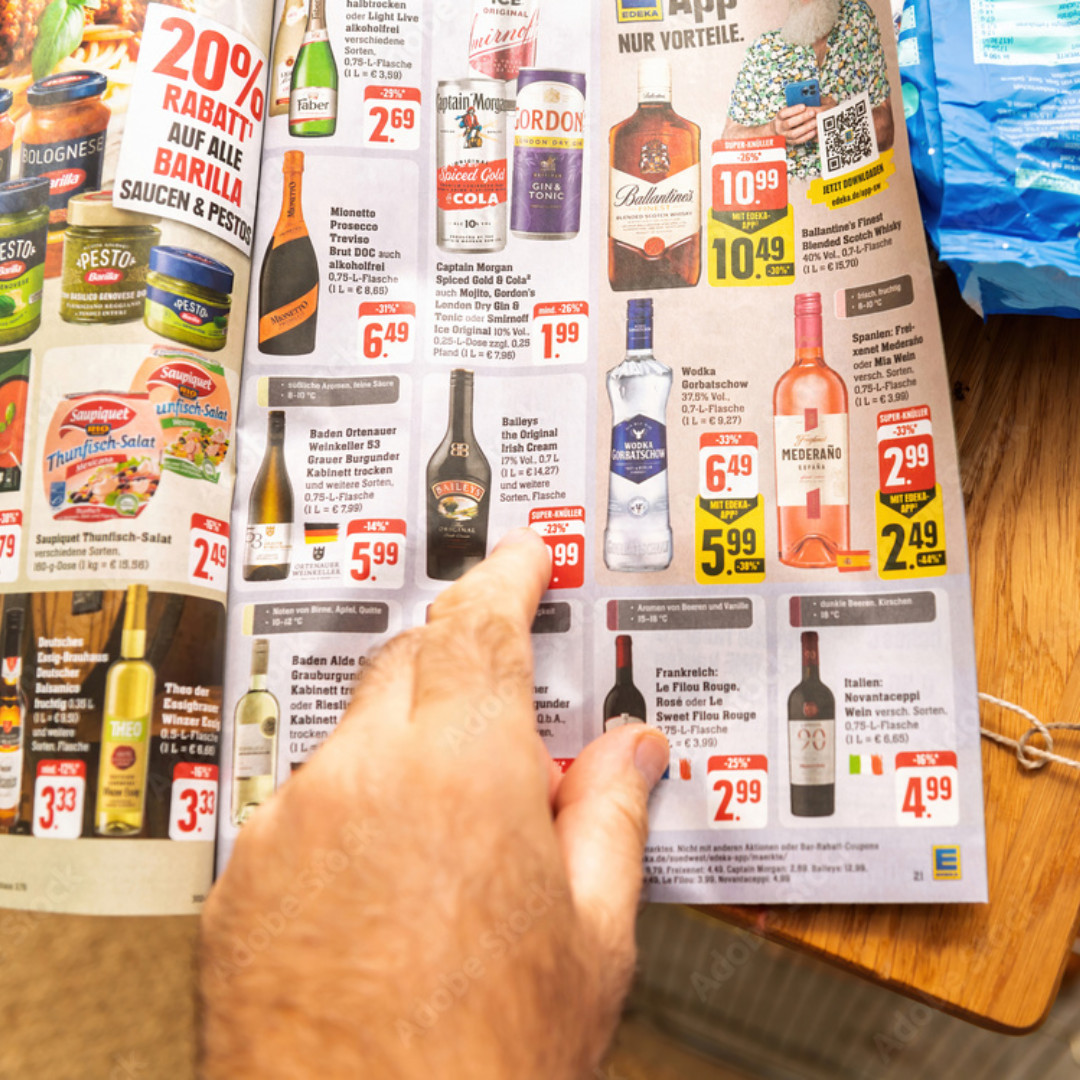
New research from Print Power has further confirmed print’s essential role in engaging customers and driving sales. Arjen van Lin, Kristopher Keller and Jonne Guyt investigated what happens when retailers stop using store flyers. Their analysis of Dutch households before and after Lidl stopped flyer distribution in the province of Utrecht found:
- Total grocery spend at Lidl dropped by 7.7%.
- Items purchased fell by 6.1%.
- Spending on promoted items declined by 4.6%, and on non-promoted items by 6.3%.
- The number of shopping trips to Lidl dropped by 2%.
- Households spent 6.2% more at other retailers without increasing store visits.
Lidl lost market share. Customers shopped as often, just elsewhere.
The study found households identifying Lidl as their main retailer maintained consistent shopping habits. However, among occasional Lidl shoppers, the absence of the printed flyer resulted in noticeable disengagement. Overall spending fell by 8.8%, spending on promoted items dropped 5.7%, and the number of promotional items purchased decreased 4.3%. These customers shifted both promotional and non-promotional purchases to their primary retailer, highlighting printed flyers’ critical role in attracting and retaining occasional shoppers.
The study’s findings align with consumer behaviour in several EU countries – such as Belgium, the Netherlands, Germany, and France – where print is still the preferred format for retail advertising. 2023 bpost research found that 60% of Belgian consumers prefer printed promotions, and Dutch data showed that 54% of people would miss printed flyers.
The decision by the French government to discontinue the “Oui Pub” initiative echoes this. Launched in 2022 under the Climat et Résilience law, the pilot programme introduced an opt-in system for unaddressed advertising mail in an effort to reduce paper waste from unread flyers. The trial officially ended on 1 May 2025. While a drop in paper waste was seen in pilot areas, the results were inconclusive, as similar trends occurred in non-participating regions. Additionally, the shift toward digital retail advertising brought its own environmental challenges, such as electronic waste and increased energy use. Economic concerns were also raised by local media and distribution sectors, who reported significant financial strain due to the decline in flyer-related business.
Important to note too is the accessibility and longevity of print. Printed flyers are typically read in shared household spaces, revisited multiple times, and easily browsed for deals. In contrast, digital alternatives demand active engagement, reliable digital access, and a level of effort that not all consumers are willing or able to invest.
For example, Lidl’s digital flyer, accessible through the “Lidl Plus” app and website, was heavily promoted in Utrecht. While most households had digital access and many transitioned to the online version after the print flyer was discontinued, those who made the switch around that time significantly reduced their spending at Lidl across all categories. The study indicates that these households adopted the digital flyer out of necessity rather than preference and did not engage with it in a meaningful way.
Then there is the question of sustainability. Digital retail media and advertising have their own environmental footprints when taking into consideration device use, cloud storage, energy consumption, and e-waste. Paper flyers are often recycled and increasingly come from sustainable sources.
And what about the economics? The study calculates that, at average industry margins (3% to 4%) and flyer costs (€0.02 per household), the loss of profit from reduced customer spend outweighs the savings from no longer printing.
Print is favoured. It performs well on many fronts. Talk to Ricoh and explore how it can perform well for you too.